
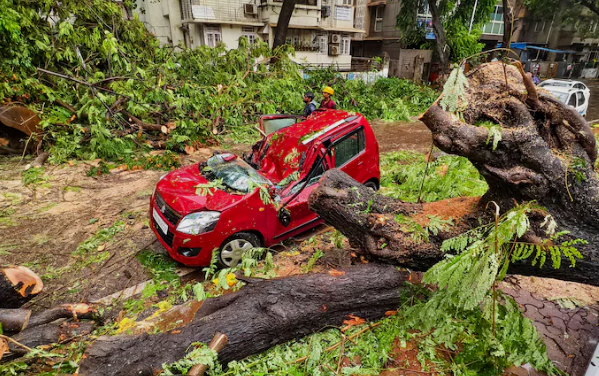
Heavy rain and waterlogged roads have become an annual nightmare for vehicle owners across India. Every monsoon, thousands of cars and two-wheelers are left stranded in flooded streets, damaged by falling trees or submerged in rising water.
The biggest question that follows is simple: Who pays for the damage? The answer depends less on the weather and more on the insurance policy sitting in your glove box.
Insurance experts say compensation is available for monsoon-related damage, but only if the vehicle is covered under a comprehensive motor insurance policy. Owners relying solely on the mandatory third-party insurance should not expect reimbursement for damage to their own vehicle.
Atrey Bhardwaj, Chief Growth Officer at Probus, says a comprehensive policy is the key to protecting a vehicle against losses caused by flooding, heavy rain, waterlogging and other monsoon-related incidents. A basic third-party policy, he points out, offers no protection for damage to the owner’s own car.
Shashi Kant Dahuja, Executive Director and Chief Underwriting Officer at Shriram General Insurance, echoes the same view. According to him, comprehensive motor insurance typically covers losses arising from floods, waterlogging, landslides and even incidents where trees fall on parked vehicles.
Meanwhile, Sachin Joshi, President-Claims, Operations and Customer Service at Liberty General Insurance, says such policies cover natural calamities under insured perils like floods, inundation, landslides and rockslides, allowing registered owners to seek compensation if their vehicle suffers damage.
Mistakes That Could Cost You Your Insurance Claim
Ironically, the biggest damage often happens after the flooding. Experts unanimously warn against trying to restart a vehicle that has stalled in deep water.
Bhardwaj says if water has entered the engine and the owner attempts to restart it, the resulting engine damage is generally treated as consequential loss under a standard comprehensive policy. Unless the vehicle has an Engine Protection add-on, the insurer may reject that part of the claim.
Dahuja also advises owners not to start submerged or severely waterlogged vehicles, saying it can worsen engine damage that may not be covered under the base policy.
Joshi explains that repeated cranking of a water-damaged engine can lead to hydrostatic lock, significantly increasing repair costs. Such losses are covered only if the owner has opted for an Engine Protection add-on.
Sukesh Shetty, Chief Operating Officer at Zurich Kotak General Insurance, says the same principle applies across the industry. If restarting a submerged vehicle causes engine failure, insurers may exclude the claim unless the policy specifically includes engine protection.
What Should You Do If Your Vehicle Is Damaged?
The first priority is safety. Joshi advises motorists to ensure the safety of all passengers before worrying about the vehicle. He also recommends avoiding flooded roads whenever possible.
Once the vehicle is stranded, experts recommend leaving it untouched. Instead of attempting repairs or restarting the engine, owners should immediately inform their insurer, click photographs or record videos of the damage, and wait for the insurer’s surveyor to inspect the vehicle.
Bhardwaj says visual evidence can strengthen the claim, while Dahuja stresses that prompt reporting helps ensure a smooth and hassle-free settlement.
Joshi further advises owners to tow the vehicle to an authorised workshop instead of driving it and to avoid any repairs before the insurer completes its inspection.