
AI gives advisors the ability to act as a proficient risk manager, expert, and consultant.
In India, most people don’t buy insurance. They are sold a risk cover without fine prints of Extensibility, Limits, and Exclusions. This would happen by a cousin at a family wedding, during a bank visit or simply due to a colleague who had a smooth buying experience.
The decision is rarely made after a detailed analysis, more like a quick buy product seen in retail stores and ecommerce sites. In reality insurance buying requires multifaceted scenario analysis where artificial intelligence (AI) technology can play a significant role. The opportunity lies in going beyond generalities to focus on the technical and psychological shifts.
Case of a marketing manager
Imagine a marketing manager with multiple policies for health, life, and home. Her health policy is a floater plan with her parents, which she bought as suggested by the cousin with primary focus on lower premium. She was always seen as a responsible daughter for financial matters. Premiums were always paid on time. Every document was neatly filed in a folder, organised, labelled, exactly how it should be.
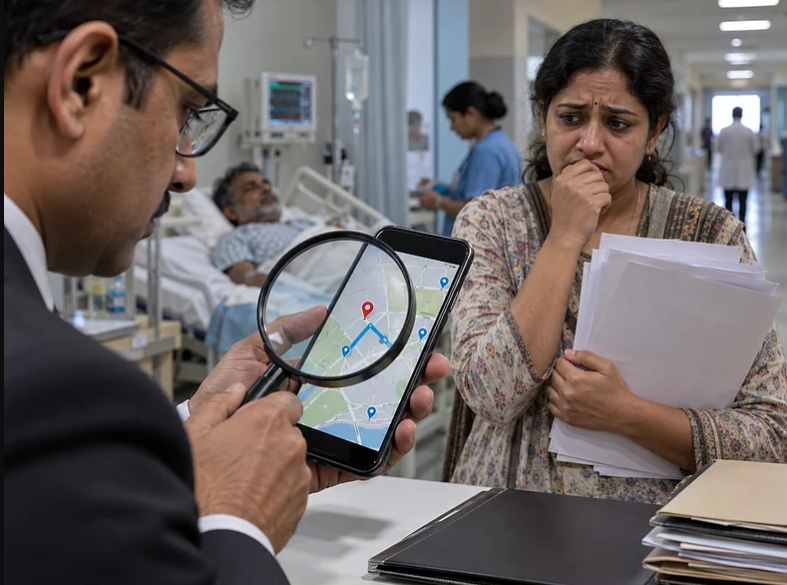
And then life happens, where a neatly organised folder isn’t enough. When her mother was admitted to a private hospital with a heart condition, at first, she didn’t panic and reached for the folder, made the necessary calls, and completed the paperwork. It felt like something she had already prepared for.
But when the final bill came, the relief didn’t last. The insurance covered only 50% due to room rent limits mentioned in the policy. For the first time, she realised that having insurance and being fully covered are not always the same thing.
This is a story told every day. Sit in a hospital’s billing section, you will hear some version of it almost every hour. The names change. The illness changes. Sometimes it’s a father’s cancer diagnosis. Sometimes it’s a road accident. Sometimes it’s a young couple discovering, mid-hospitalisation, that their policy has a sub-limit on room rent charges. In all cases they never knew a limit like this existed.
What doesn’t change is the expression on people’s faces when the numbers don’t add up.
The confusion. The quiet panic. And then, underneath it all, a single question: “But I had significant insurance coverage. How is this possible?”
The gap nobody talks about
What most of us don’t think about until it’s too late, is that insurance is a method for loss minimisation or prevention at its best. It is a structure. And like any structure, it can have gaps in coverage, limits, exclusions, and many other things.
A policy gap analysis is a methodical way of identifying such gaps. For instance, a ₹3 lakh ($3,197) health cover that made perfect sense in 2016 may seem inadequate in 2026 after factoring in the increased cost of healthcare. Similarly, a room rent limit can cap reimbursements even when the overall sum insured appears sufficient. Policies may also have waiting periods for specific conditions, such as cataracts, hernia, or kidney stones, leaving policyholders exposed when they least expect it.
Why humans overlook policy gaps
Even when people know their coverage might be inadequate, they often tend to ignore it. A serious illness, a sudden death, an unexpected liability, these are scenarios the mind instinctively moves away from. Even though one is not sure about the coverage, limits, and exclusions, people tend to buy a policy just for the comfort.
The reasons are more psychological than logical. This comfort is precisely what falls apart at a hospital billing counter leading to a self-pity of not understanding enough about the policy whilst buying.
From salesman to risk managers
Today, insurtech platforms are increasingly using AI-powered tools to instantly scan complex policies, surface hidden gaps, and present a clear picture of an individual’s actual insurance exposure within minutes.
Behind the scenes is the power of Natural Language Processing (NLP) to read and compare thousands of product brochures, and policy documents.
This sounds exciting but unlikely to replace the trust given by a human advisor. On the contrary, this gives advisors the ability to act as a proficient risk manager, expert, and consultant, guiding customers through instant gap analysis, valuable insights, and sharper recommendations.
Conclusion
For policyholders, insurance may still look the same but policy gap analysis changes their understanding about “silent exclusions”, the tiny clauses that create massive gaps. This would also enable customers to create holistic risk portfolios where AI is optimising premium allocation whilst identifying gaps and overlaps simultaneously.
The difference between feeling insured and being truly protected will be clearly visible.
AI-driven gap analysis is not only better for customers but also has the potential to be a growth engine for the industry. A tectonic shift would come when industry starts moving from product-centric to portfolio-centric approach which can lead to higher persistence, improved claim satisfaction, and data driven cross sale.