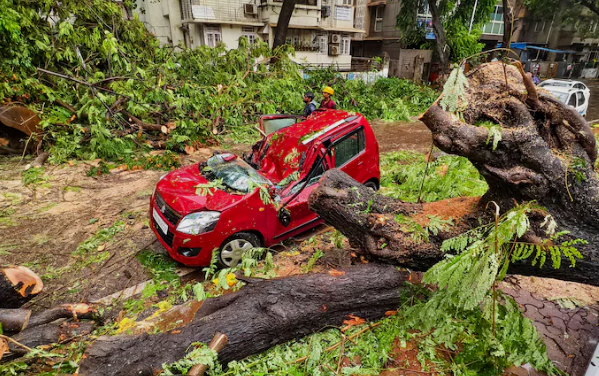

The ongoing monsoon in India is a time when we should watch not just the skies and the downpour, but also carefully scrutinise the fine print of our home insurance policy. The mere assumption that one has such an insurance policy and any claims arising from such climatic events will automatically be covered is an avoidable fallacy.
There are many exclusions in your home insurance policy, and the policyholder must carefully review them to avoid being caught off guard at the worst possible moment.
“Like every other insurance segment, here policyholders assume that their home insurance policy automatically covers damage caused through monsoon, but the fine print often says otherwise,” says Santosh Sahoo, Vice President of Probus. Seepage and dampness that build up gradually are usually excluded; insurers only pay for sudden, accidental water ingress, like a wall collapsing or floodwater entering in a single event.
If your roof has been leaking for weeks and finally damages your ceiling, that’s often treated as ‘wear and tear,’ and not a valid claim. People also skip add-on covers for basement flooding or landslide-prone areas, not realising the base policy doesn’t include them. And very few actually insure their boundary walls, gates, or external structures, which take a real beating every monsoon.
“A very important issue only surfaces when a claim is actually filed,” says Venkatesh Naidu, CEO, BajajCapital Insurance Broking. Many homeowners insure their house for what they paid for it, or its current market value, when the policy should really reflect what it would cost to rebuild the structure today. Insure for less than that, and insurers apply what’s called the average clause, settling the claim only in proportion to the sum insured. It’s one of those details that tends to catch people off guard at exactly the wrong moment.
Beware of deductibles
“Every policy has deductibles that the policyholder must bear, and unless replacement-value cover is available under the policy, depreciation may apply to certain household contents,” says Rohit Khurana, Head – Claims and Inbound, InsuranceDekho.
High-value belongings, such as jewellery, artwork, collectables, and expensive gadgets, often need to be specifically declared or insured separately.
Damage caused by blocked drains, leaking roofs due to poor upkeep, structural defects or negligence – such as leaving windows open during heavy rain – may not be admissible under the policy.
Items stored in basements or outside the main structure may have limited or conditional coverage depending on the policy.
If your home is damaged by torrential downpour, the next step is to inform your insurance company.
In the event of damage, policyholders should intimate the insurer immediately and share key details such as the policy number, date and cause of loss, photographs of the damage and supporting documents, wherever available, to help expedite the claims process. “Claims are typically assessed by an authorised surveyor,” says Nitin Deo, Chief Technical Officer at Zuno General Insurance, about who does the verification from the insurance company’s side.
Before carrying out repairs or disposing of damaged items, homeowners should thoroughly document the loss by collecting clear photographs from multiple angles, videos showing the extent of damage, date and time of the incident, a list of damaged items with approximate values, purchase invoices or bills, wherever available, and repair estimates from authorised contractors or service centres.
Keep your paperwork organised
“It is advisable not to dispose of damaged items until the insurer or surveyor has completed the inspection unless they pose a safety hazard,” says Khurana.
The moment the damage happens, you are supposed to call the insurance company immediately, preferably within 24-48 hours. You are not supposed to touch or fix anything until it is documented. For larger claims, insurers usually depute a surveyor to physically inspect the property; this isn’t optional for significant amounts. You’ll also need bills or estimates for repair costs, and sometimes purchase receipts for damaged appliances or furniture. “It’s a fairly document-heavy process, so people who keep their paperwork organised from day one tend to have a much smoother experience than those scrambling afterwards,” suggests Sahoo.