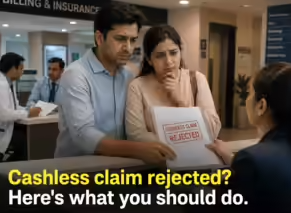
Having your cashless health insurance claim turned down, especially during a medical emergency, can be really stressful. But before you panic about your insurer not covering it, remember that a lot of cashless claims are rejected because of documentation or procedural problems, and these can often be fixed.
Keep reading to find out why cashless claims get rejected, what you should do immediately, and how you can still get your claim settled.
Why do cashless health insurance claims get rejected?
A cashless claim rejection is often mistaken for a denial of the insurance claim itself. However, a cashless rejection typically occurs because of a procedural or documentation problem rather than indicating that the claim won’t be paid.
“It can happen if the treatment hospital is not on the insurer’s current cashless network, as network lists are updated from time to time,” says Dr Puneet Biblani, Head – Claim, ManipalCigna Health Insurance.
It can also happen if the documents shared at the time of admission are incomplete or unclear, such as a missing diagnosis, treatment plan, or cost estimate, according to him.
Sometimes, the insurer or third-party administrator (TPA) may simply require additional medical justification from the treating doctor before approving the request.
A few other reasons include the treatment or room category exceeding the policy limits, waiting periods applicable to a particular illness, mismatches in patient records, or discrepancies between the medical information disclosed while buying the policy and the details available during treatment.
“Most of these situations are administrative in nature and can usually be resolved with the right follow-up,” he adds.