
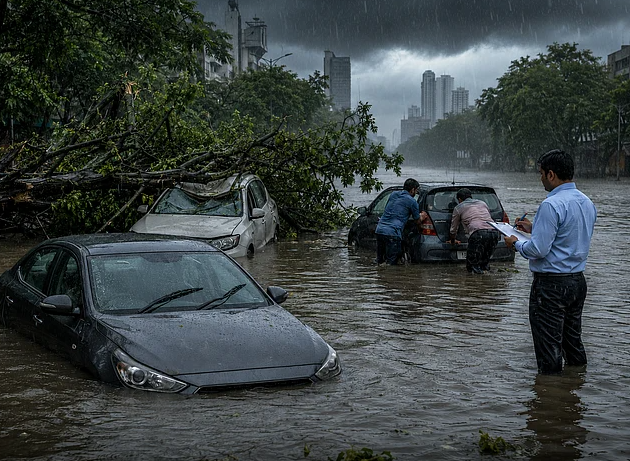
Heavy monsoon rain can leave vehicles submerged, damaged by falling trees or involved in accidents on slippery roads. Although comprehensive motor insurance covers several such losses, claim settlement depends on how the damage occurred and what the policy includes.
Monsoon Damage Covered, But Conditions Apply
Comprehensive motor insurance generally covers flooding, inundation, landslides, hailstorms, fallen trees and rain-related accidents. It may pay for damaged parts, repainting and repairs after floodwater enters the vehicle.
“The motor comprehensive or package policy covers flood and inundation. So if the vehicle is affected by flood or inundation or submergence in water, then the resultant damage to the vehicle is covered,” says Hari Radhakrishnan, expert, Insurance Brokers Association of India (IBAI).
Water ingress does not automatically guarantee a payout. Claims may be rejected if a motorist deliberately drives through floodwater, repeatedly restarts a submerged vehicle or seeks compensation for ordinary wear and tear.
“Most comprehensive motor insurance policies cover the kind of damage that is common during the monsoon, such as flooding, heavy rain or a tree falling on the vehicle. Engine damage, however, is a different case,” says Atrey Bhardwaj, Chief Growth Officer, Probus.
Why Add-Ons Matter During Heavy Rain
A standard comprehensive policy may not fully cover engine damage caused by water ingress. An engine-protection add-on can cover such repairs, while zero-depreciation cover prevents depreciation deductions on replaced parts.
“To overcome this, the smartest choice is to opt for Zero Depreciation cover, which ensures that the full amount of parts getting replaced is paid to the policyholder, thereby reducing the out-of-pocket expenses,” says Udayan Joshi, Chief Operating Officer, SBI General Insurance.
These add-ons can be useful for newer or expensive vehicles, where parts and engine repairs may result in a sizeable bill. Zero-depreciation may also improve payouts after a tree falls or rain-related accidents.
“If the motor policy is extended to include engine protection cover, then damage to the engine due to water ingress is covered. Occurrence of flood or submergence is not essential,” says Radhakrishnan.
What To Do After Flood Damage
Do not start a vehicle that has stalled or remained submerged. Restarting it can worsen engine or gearbox damage and may affect the claim. Inform the insurer immediately and document the damage.
“If a vehicle is submerged, avoid starting it. Instead, inform the insurer immediately and follow the instructions provided by them. It is also a good idea to take a few photos or videos of the damage,” says Bhardwaj.
The vehicle should preferably be towed to an authorised workshop. Do not begin repairs before the insurer’s surveyor inspects the damage or permits the work.
“Additionally, move the vehicle only if it is safe or necessary to do so, and do not commence repairs until the insurer’s surveyor has inspected the vehicle or the insurer has given instructions,” says Joshi.